
On the 10th anniversary of Stop Food Waste Day, Compass Group teams across the country brought education to life through Teaching Kitchens—transforming a global sustainability message into tangible, everyday actions for guests.
This article shares three stand-out Teaching Kitchens that did more than raise awareness on April 29, 2026. They sparked new ideas, built confidence, and showed that reducing food waste doesn’t require perfection—just intention.
Engaging Community to Reduce Food Waste
At a pharameutical client site in New Jersey, Eurest marked the 10th anniversary of Stop Food Waste Day with a virtual Teaching Kitchen that connected employees across campuses through watch parties and community storytelling with local partner organizations.
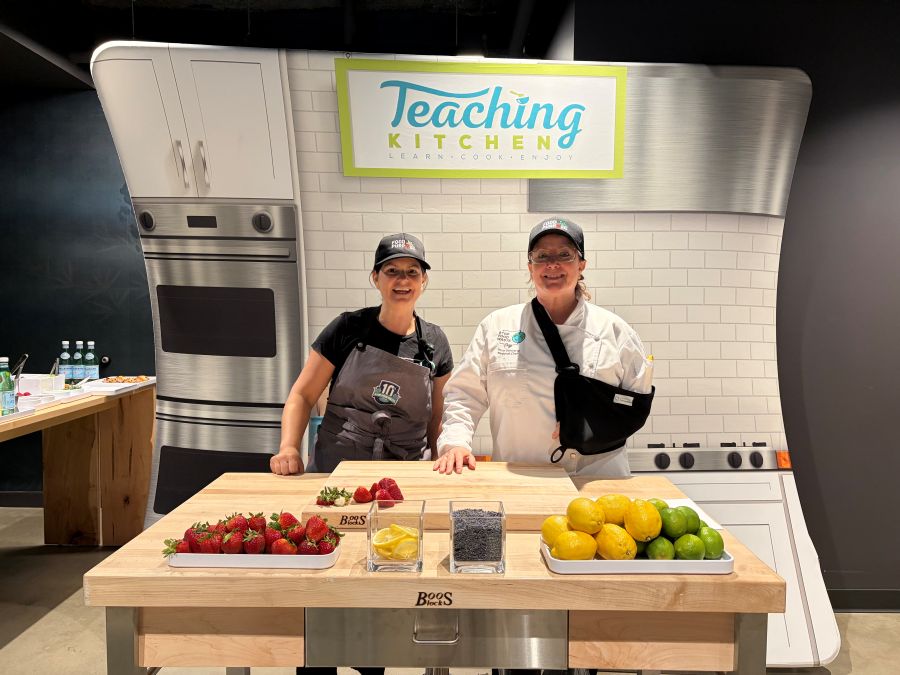
For Elena Mills, RDN, Regional Director of Wellbeing & Sustainability, the message starts with scale: the opportunity to reduce food waste is significant—and so is the responsibility. By highlighting operational strategies like waste tracking, thoughtful menu planning, and food recovery partnerships, the team made the issue both visible and actionable. But just as important was what guests could do at home.
“Planning before shopping is one of the simplest ways to reduce waste,” Elena shared. “Buy what you need—and remember, the freezer is your friend.” For Regional Executive Chef Tricia Schwartz, the focus is on creativity. “When I’m menu planning, I think about how every ingredient can be used,” she noted. “Leftover steak becomes tacos or quesadillas, and vegetable scraps turn into stock or soup.”
Together, their perspectives reinforced a simple but powerful idea: small shifts in planning and preparation can significantly reduce waste.
Where Stop Food Waste Day Meets National Pet Day
At Army Residence Community, Morrison Living found a creative way to connect sustainability with something residents already care deeply about—their pets—by aligning their Teaching Kitchen with both Stop Food Waste Day and National Pet Day.
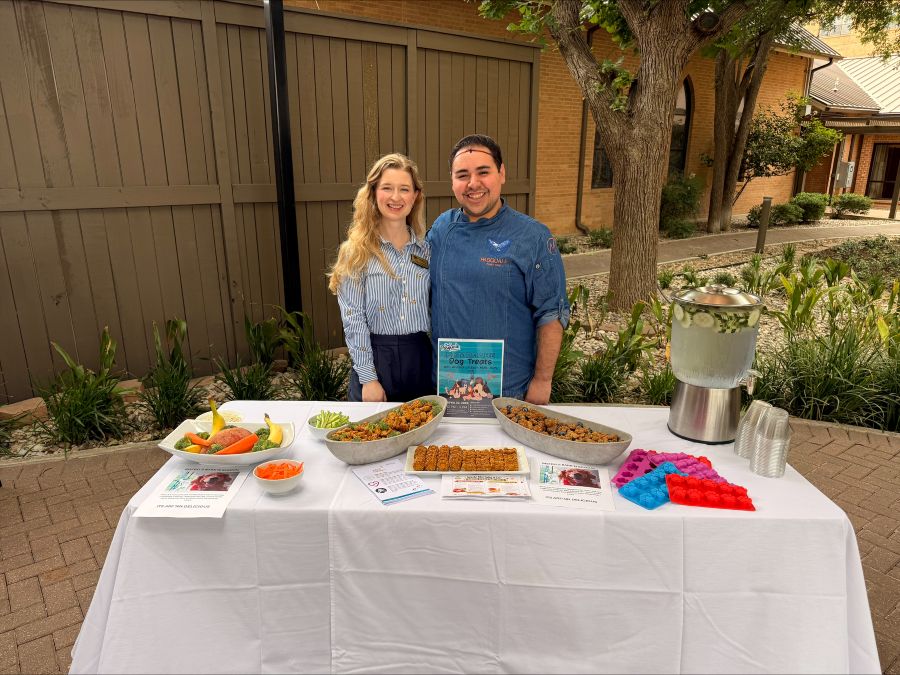

Led by Executive Sous Chef Pasquale Loera and Regional Clinical Nutrition Manager Arlayna Jackson, MDS, RDN with key support from purchasing manager Adam Strother, the session demonstrated how fruit and vegetable scraps could be transformed into simple, homemade dog treats. With nearly 90 dogs in the community, the concept resonated immediately.
Residents watched a live demonstration, sampled recipes, and took home “doggy bags” to share with their furry family members—turning food waste education into an experience that was both practical and personal.
“Before throwing something away, ask yourself: can this be used for something else?” the team encouraged.
By connecting food waste reduction to something joyful and familiar, the experience made sustainable habits feel approachable—and even fun. It reinforced the idea that reducing waste doesn’t require major changes—just a shift in perspective.
Building Confidence Through Culinary Education
At Stony Brook University, CulinArt’s Teaching Kitchen focused on building both confidence and capability in the kitchen—especially for students learning to cook on their own for the first time.

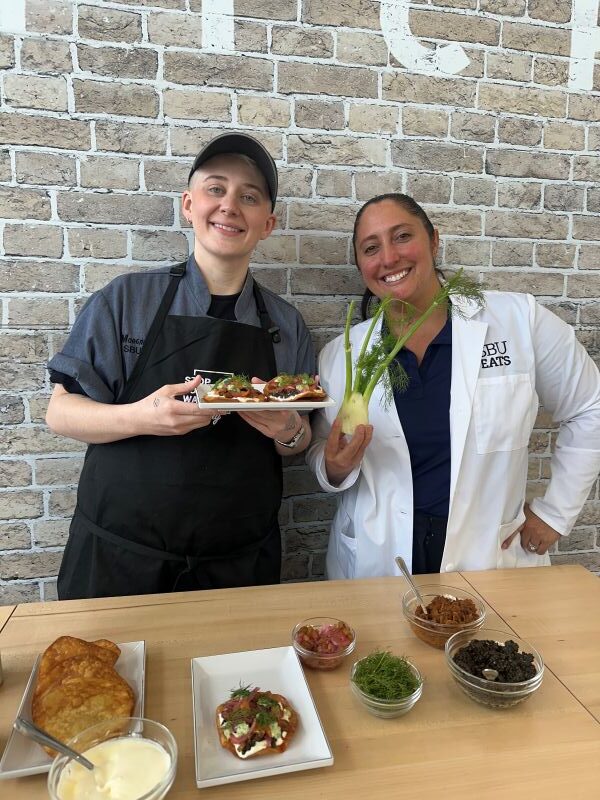
Executive Chef Morgan Elliott led a “tip-to-tail” demonstration using fennel, showing students how every part of the ingredient—from bulb to stalk to fronds—can be used in different ways.
Campus Registered Dietitian Laura Martorano, MS, RD, CDN, IFNCP paired the culinary demo of Black Lentil & Fennel Barbacoa Tostadas with nutrition education, helping students understand both the how and the why behind their food choices.
For Laura, this type of education goes beyond a single meal. “Teaching students to use ingredients in their entirety helps them build lifelong skills that support both personal health and environmental sustainability.”
Students also left with simple, actionable strategies—like using a first-in, first-out (FIFO) approach and planning meals around ingredients they already have—to help reduce waste in their own kitchens.
From Inspiration to Action
Across all three Teaching Kitchens on Stop Food Waste Day 2026, a few themes stood out:
- Plan ahead and shop with intention
- Use ingredients fully—from root to leaf
- Repurpose leftovers into new meals
- Keep it simple with small, sustainable habits
These aren’t complicated changes—but they are impactful ones. Because when people see what’s possible, they’re more likely to take that next step—from awareness to action.